More Posts
Notice the air that gets through under your door? Small gaps are big inconveniences. There are gaps you should seal if you want to keep your room comfortable and warm.
It does not mean replacing the entire door. A simple door sweep would be an option. You could also make a simple draft stop out of common household items and save money in the process.
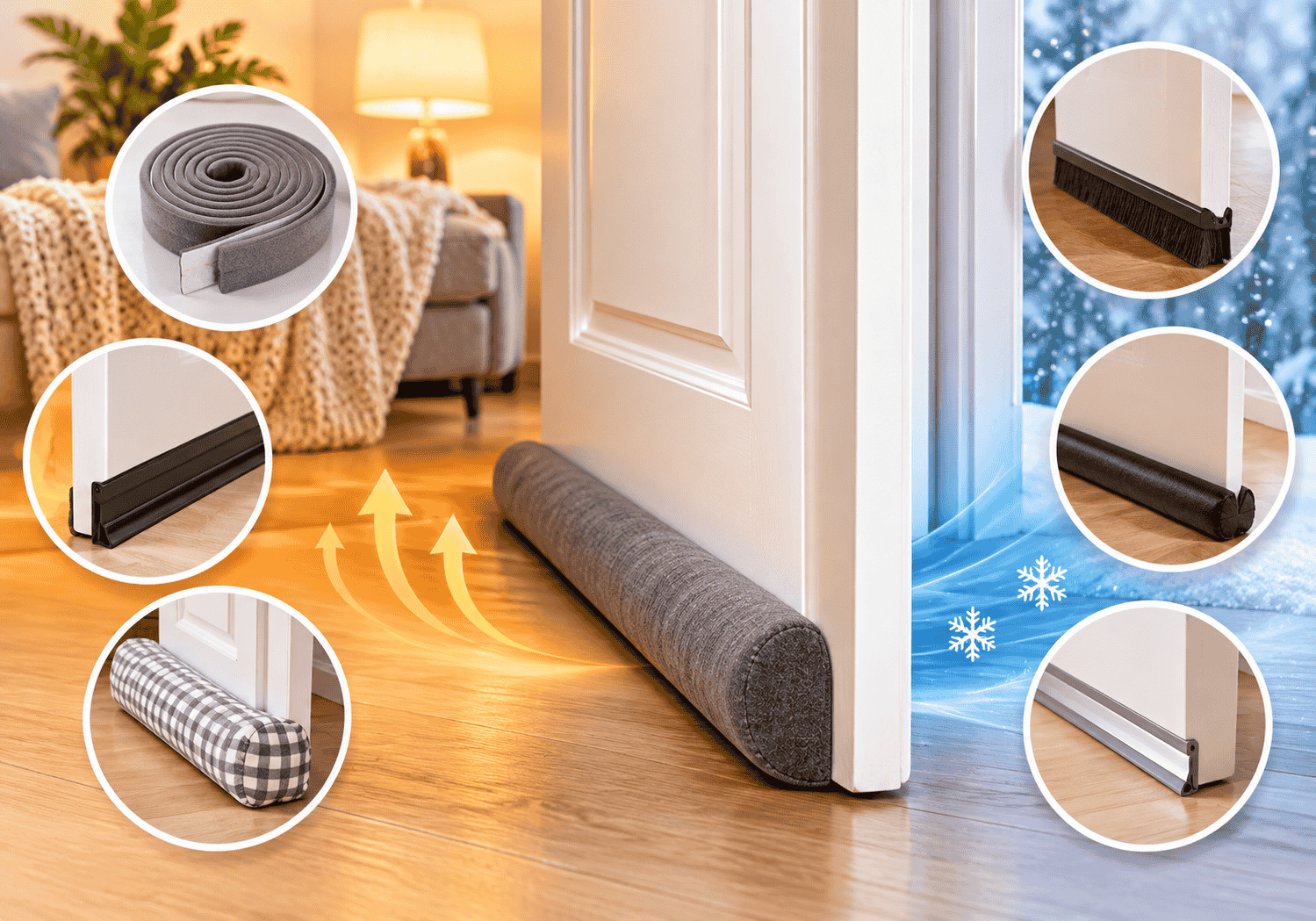
There are many different types of door sweeps you could purchase. Depending on how much foot traffic a particular door has, there are door sweeps made to withstand all that traffic. I’ve come up with a list of seven of my favorite door draft stopper ideas for you to check out.
1. Make a Weighted Denim Draft Snake
[Check out this link for full tutorial]
Have a pair of jeans that you no longer wear? Denim makes a perfect material to craft a door draft stopper.
The substantial build of denim fabric allows it to resist cold air spreading under the door. Making one is a very simple and inexpensive process, all you need to do is sew a long strip of denim together, add cotton/polyester stuffing, and place weight such as rice or pellets inside of it.
You’ll need:
- Old denim
- The stuffing (cotton or polyester)
- Rice/weighted pellets
- Sewing up with needle and thread or sewing machine
To create your draft stopper, first measure and cut fabric long enough to cover the bottom of your door, making sure to leave plenty of room for stuffing. After completing this, zip one side, pack the bag with weight and zip the other side.
Place an additional weight on the stopper to help it to stay in place.
2. Use a No-Sew Tube Sock
[Check out this link for full tutorial]
Lack of sewing experience doesn’t have to keep you from using a sock to block that draft. These are easy to make and only take a few minutes.
Just fill a clean warm sock with bits of cloth or with some rice, or anything else that is of similar consistency. It is best to stuff it tight to maintain its shape, and close it at the end.
Put it in place on your door.
Being flexible with the material of the sock shouldn’t matter if your door has quirks and bumps, and it allows for easy transportation, when you need to open your door.
It can be used for plugging small openings and it is both good and inexpensive.
3. Try a Pool Noodle Door Stopper
Pool noodles don’t have to be for swimming and can actually have other uses! It is possible for foam to block cold air.
In this manner, the size of the noodle should be the same size as your gap.
- The first step is to size your door.
- Then slice off your pool noodle.
- Then cut it lengthwise.
- Lastly, the door is fastened with the door noodle at the bottom of the door.
An amazing benefit is that the door moves in the middle and the door noodle moves likewise. Does not need to be moved around.
This is an excellent method to use for interior sliding doors that are used regularly. Just make sure that this door will be easy to close, and watch out for floor damage.
4. Turn an Old Sweater Into a Draft Stopper
[Check out this link for full tutorial]
A creative way to make an effective draft stopper with an old sweater. Even more stylish and warm than fabric made of knit or woven fabric, it’s also just as functional.
Take the sweater off and sew one end and stuff with some batting or filler material. It may be good to add some weight, as well.
Seam or tie the other end.
Even a sweater with an interesting pattern or colour can be a good addition to the winter decoration. Put it in front of a door to a bedroom or living room to help minimize the amount of air flow through the house.
5. Make a Tailored Canvas Door Stopper
[Check out the Churchgate Swithland Draught Excluder]
A more sophisticated door stopper will be provided with Canvas or faux suede.
Canvas and faux suede stopper is very durable and is intended to be used. A ribbon could be used to pull the door stopper around if it has difficulty moving.
Just sew 2 identical pieces of fabric together to form a long tube, leaving one end open. Fill, add weight to keep the door stopper on the floor and then sew the unsewn end.
Choose a colour that is appropriate to your furnishings and/or the floor. This is better than a flimsy towel or sock, and can be a pretty feature in your house, if you are brave enough to do it.
6. Hang a Thermal Door Curtain
[Check out the Thermal Insulated Door Curtain]
The problem may not only be at the bottom of the door. The weather stripping on the door can wear and tear, and cold air can come around the top and side of the outside door.
In this instance, use a thermal door curtain.
Create a heavy, insulated door curtain that hangs in front of the door. It adds another layer between the freezing outdoors and your living room.
For the best outcomes:
- Pick an curtain that is thick and has thermal insulation.
- Be sure to fill in the entire doorway.
- Stretch it slightly beyond the edge of the door.
- Shut off in very cold nights.
This is helpful for older homes that have drafty doors. It will not fix broken or damaged door seals, but can create an extra layer of cold air protection.
7. Skip the Loose Plastic Bag Filler
[Check out this link for full tutorial]
One might imagine it’s simple to fill a fabric tube with loose plastic grocery bag to create a draft stopper. It is not the most reliable, but at nearly nothing it’s not too expensive.
Plastic bags are light in weight and smooth. They may move around within the fabric, which can lead to loss of shape of the stopper. May also roll when the door opens.
For reusing household materials, fabric scraps or stuffing and rice are preferable.
The idea is to make something that will not fall off and will fill the space correctly. The floppy stopper is not going to stop a lot of cold air.
Don’t Forget Other Sources of Cold Air
While it’s a good idea to fix your doors, cold air can also seep through other parts of your home.
Before winter worsens, do a check on these areas:
- Windows: Check frames for gaps; seal windows with appropriate types of caulk or weatherstripping.
- Check the sides and top of door frames for damaged rubber seals.
- Basements: Check around basement doors and windows.
- Attics: Inspect for missing or damaged insulation.
Don’t forget about drafts around windows. Any opening, even small ones, can cause nearby rooms to feel colder.
If you’re seeing multiple cold spots, it might be better to work on the overall insulation of your home rather than repairing a single doorway.
Keep Your Home Warmer This Winter
It’s not necessary to use complex instruments or costly materials to manage all your cold drafts. Use an old sock, denim fabric or pool noodle to seal gaps under doors. Consider thermal curtains and door seals for larger problems.
Try to begin with the simplest one and see if it matches up with your door. The TapAFix app offers the option to book a repair that is suitable if there is any damage to the doors, frames or any other home repairs.
With a few simple changes, your home can be more comfortable, and you can keep the cold air out.
Frequently Asked Questions (FAQs)
Do door draft stoppers really work?
Yes. Keep rooms warmer and more comfortable by blocking drafts at the bottom of the door with draft stoppers. But they will NOT seal gaps around the SIDES or TOP of the door.
What is the best way to stop door drafts?
Use a door sweep or draft stopper to close any door gaps. Weatherstripping should be used around the sides and top of the frame to keep cold air from coming in through other openings.
What is the best type of door draft stopper?
For exterior doors, you should consider using a fitted door sweep as it will remain in place and close the bottom opening. If you need a quick and easy solution that can be easily removed, go for fabric stoppers or slide-on foam stoppers.
What is a door draft stopper?
A door draft stopper is a barrier installed across or on the bottom of a door to prevent cold air from coming in through the draft. It can be made of fabric, foam, rubber or silicone.