More Posts
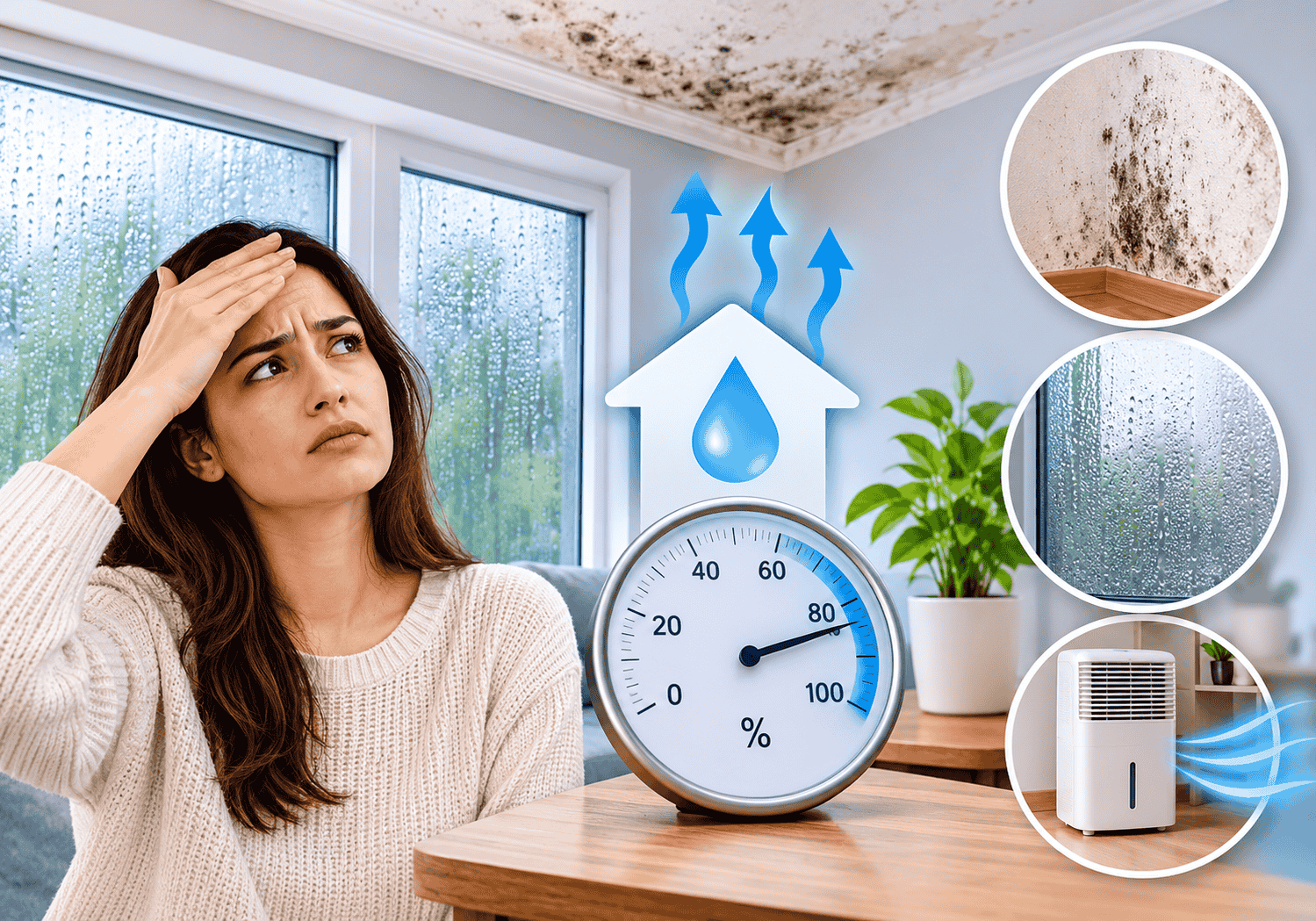
Is it sticky in your house despite running the air conditioner? Are your windows fogging up or have certain rooms a musty odour? This may be a symptom of high humidity in house.
Excessive humidity in the home can cause discomfort in rooms. It can also foster the growth of moulds, hurt furniture and impact on indoor air quality.
The bright side is that it doesn’t require a lot of cash to remedy. Some changes in your daily habits, proper ventilation and the right home maintenance can make a difference.
Some easy ideas on controlling humidity and comfort in your home are given below!
1. Check Your Indoor Humidity Level First
Before you make any adjustments or spend money on equipment, make sure you know what your current humidity levels are. A simple, inexpensive digital hygrometer is all that is required.
The simplest method is to employ a digital hygrometer. This is a small instrument that can be used to measure the relative humidity (RH) of your home.
- 30-50%: A common suggested range for the indoors.
- 50% – 60%: Monitor moisture levels.
- If humidity 60% or higher, take steps to control it and investigate to find where the excess moisture is.
The hygrometer may be placed in the normal room provided it is not subjected to extreme heat or direct sunlight or windows or vents.
It can be normal humidity in the living room but it may be too damp in the basement. With knowledge of the location of the humidity issue, it will be easier to find the solution.
2. Improve Ventilation Around Your Home
Poor air circulation can be one of the reasons for water to build up inside the house. Moisture is released during cooking, showering, washing clothes etc.
Adopt a few easy habits.
Use kitchen and bathroom exhaust fans
Use the exhaust fan while showering and cooking. Let the fan continue running for about 15-20 minutes afterwards.
Make sure your fan isn’t venting to the attic or to some other closed space and instead, is actually bringing air in from outside.
Open windows when outdoor air is drier
It can be refreshing to let outdoor air come in, but make sure the weather isn’t going to ruin it. Avoid this when the weather is hot and humid, as it will just end up adding even more humidity.
Try to set up cross-ventilation when it is cooler and less humid.
Keep air moving
Use ceiling fans or floor fans. Make an effort to open interior doors to circulate air between the rooms.
Although fans won’t get rid of the moisture, they can prevent moisture and stagnation from building up.
3. Use a Dehumidifier in Damp Rooms
A damp room dehumidifier works by removing excess air moisture.
It’s particularly helpful in:
- Basements
- Laundry rooms
- Poorly ventilated bathrooms.
- Humid spaces throughout the day
Keep your humidity between 45% and 50% and walk away. Don’t forget to either empty the water tank on a regular basis, or simply hook up a drain hose to a drain to provide for continuous operation.
Dehumidifiers can also be used in bigger houses. A few things to consider before buying a dehumidifier are the ideal room size, and the level of humidity of the room you’re purchasing it for. Another thing to consider is the energy rating of the unit you’re planning to buy.
4. Reduce Moisture From Everyday Activities
You may unknowingly be bringing water into your home. Things such as the kitchen and bathroom, or simply laundry activities, can add humidity.
Check out these tips to indoor home humidity control.
- Avoid overusing cooking. Try not to do it all at once if possible. For instance, all cooking on a burner, e.g. stove. Additionally, don’t cook with an uncovered pan.
- Avoid drying your clothes inside. If necessary, use an outdoor line, or preferably, use an external vented dryer.
- Cut back on your shower. Simple things can cause humidity, such as using the dryer, even showering.
- Take shower wall soap after each use to prevent standing water.
- Make sure dryer vents are cleaned; dryer vents need to have a clear passage of exhaust for the moisture in dryer vents to be free of lint.
- Indoor plants need a higher level of vigilance when located in damp environments. If your house has higher levels of moisture, be extra cautious with indoor plants.
Minor changes help reduce everyday household humidity.
5. Check Your Air Conditioner and HVAC System
Your AC cools the air, it serves a lot more than that. It also drains moisture when it’s flowing. If it’s operating incorrectly, humidity could build even when your home has comfortable temperatures.
Some of the things to look for:
- Change or clean the air filters when the manufacturer says to.
- Keep the air conditioning unit’s coils clean.
- Clear any obstructions in the condensate drain line. Check to make sure it’s free of standing water.
- The air conditioning system’s fan can be switched to the “auto” position.
- Have an HVAC expert look at the cooling system if the unit turns on and off a lot. Have them check if it is managing the level of humidity in your home.
You shouldn’t adjust the AC settings if your home is too humid. Your air conditioning unit should be checked by an HVAC technician to see if the unit has the right capacity, is in good condition, and is capable of managing the home’s moisture levels.
6. Find and Fix Leaks Around the House
You may not be the issue if it’s not your daily routine or ventilation. A leaking water pipe could be leaking water into the air.
Check these areas:
- Bathroom/Kitchens: Sink leaks, cabinets, and wetness around them.
- Windows: Water marks, condensation and damaged seals.
- Baseboards: Wetness, cracks or odors.
- Roof and ceiling: Paint that has begun to peel and water stains.
- Plumbing: Dishwashers, washing machines and water heaters.
Finally, you should make sure your gutters are clean, and that the downspouts have the rainwater flow away from your home. It’s also a good idea to check your foundation and drainage system if you are getting a lot of water in the basement.
It is also important to repair leaks quickly. Dehumidifiers do work well, however if water continues to find its way in your home, they will not work for you at all.
7. Improve Airflow in Closets and Basements
Some of the rooms in a house have low airflow. Air that stops moving gets damp, and damp air in closets, storage rooms and basements causes problems.
The solutions are as follows:
- Let airflow into the closets by leaving closet doors open sometimes.
- Avoid putting furniture on or adjacent to cold exterior walls.
- Keep your basement storage area clean and organized.
- Hang dry laundry after everything is completely dry.
- Use plastic storage containers instead of cardboard in basements with damp floors.
- Don’t use rugs on basement floors that are wet.
In the case where moisture is present after taking these steps, run a dehumidifier and check for leaks in the area.
8. When Should You Call a Professional?
Occasionally opening windows and turning on a dehumidifier won’t do the trick. Professional intervention might be necessary for any of these signs:
- Still high humidity in house after dehumidifier usage.
- Your air conditioner cannot adequately dehumidify the air.
- Walls or ceilings are noticed to be leaking.
- Your basement continues to leak water.
- Mould is persistent following cleaning.
- You can smell musty odors that won’t go away.
A plumber can take a look at the leaky pipes, an HVAC technician can inspect your cooling and ventilation system. For things such as a plumbing or air conditioning issue, home maintenance needs to be completed and can be scheduled via the TapAFix app.
Keep Your Home Comfortable and Dry
It’s not all about purchasing all the appliances around. First, adjust humidity, vent, fix leaks and avoid steam from normal activities.
Be sure to not assume a dampness issue is all throughout the house when it may be a minor leak, or a ventilation problem.
Maintain indoor humidity at 30-50%. Check for moisture in your home regularly and prevent moisture problems from turning into mold or damage.
Frequently Asked Questions (FAQs)
Why is my house 70% humidity?
High humidity in house or even an indoor humidity reading of 70% can result from many causes. The main culprits of indoor humidity problems include bad ventilation, drying laundry indoors, long, hot showers, plumbing leaks, and malfunctioning air conditioners.
How do I get rid of high humidity in house?
- Use kitchen and bathroom exhaust fans.
- Repair plumbing and roof leaks.
- Don’t dry clothes in the house.
- Set your AC to Auto fan setting.
- Decrease humidity by opening windows when outdoor air is lower in humidity.
Is 80% humidity in a room high?
Absolutely. It is extremely high for the indoors (80%). Mold, mustiness, and deterioration of the furniture, walls and floors can occur. Keep the humidity levels in the indoor space within the 30% to 50% range.
Is high humidity in house bad for a house?
Yes. An excess of moisture in a home causes musty smells, deterioration of furniture, walls and floors, peeling of the paint, and molding. It will also affect the air quality and comfort in a home.