More Posts
The installation of a smart home is no longer confined to luxury houses. If you don’t want to spend too much time on a fancy technology project, a few connected lights, a video doorbell, a smart thermostat or a smart lock will make everyday life easier.
The price may also be widely different as well. Standard systems start at approximately 800–2,500, and a more comprehensive home automation system could cost 3,000–8,500 or higher in Canada. For large, custom systems, there are a number of variations, depending on the number of rooms, devices, wiring and level of integration, the same number of rooms can go much higher.
So what are you paying for?
Let’s discuss what the smart home installation entails, the cost difference between various home smart homes and which elements can drive costs up even further.
What Is Included in Smart Home Installation?
A smart home is a collection of devices that are linked together via your home network and can be controlled through an app, voice commands, schedule or central control.
It can be as simple as talking to your phone and making it dim the lights. It can also involve several systems working together automatically.
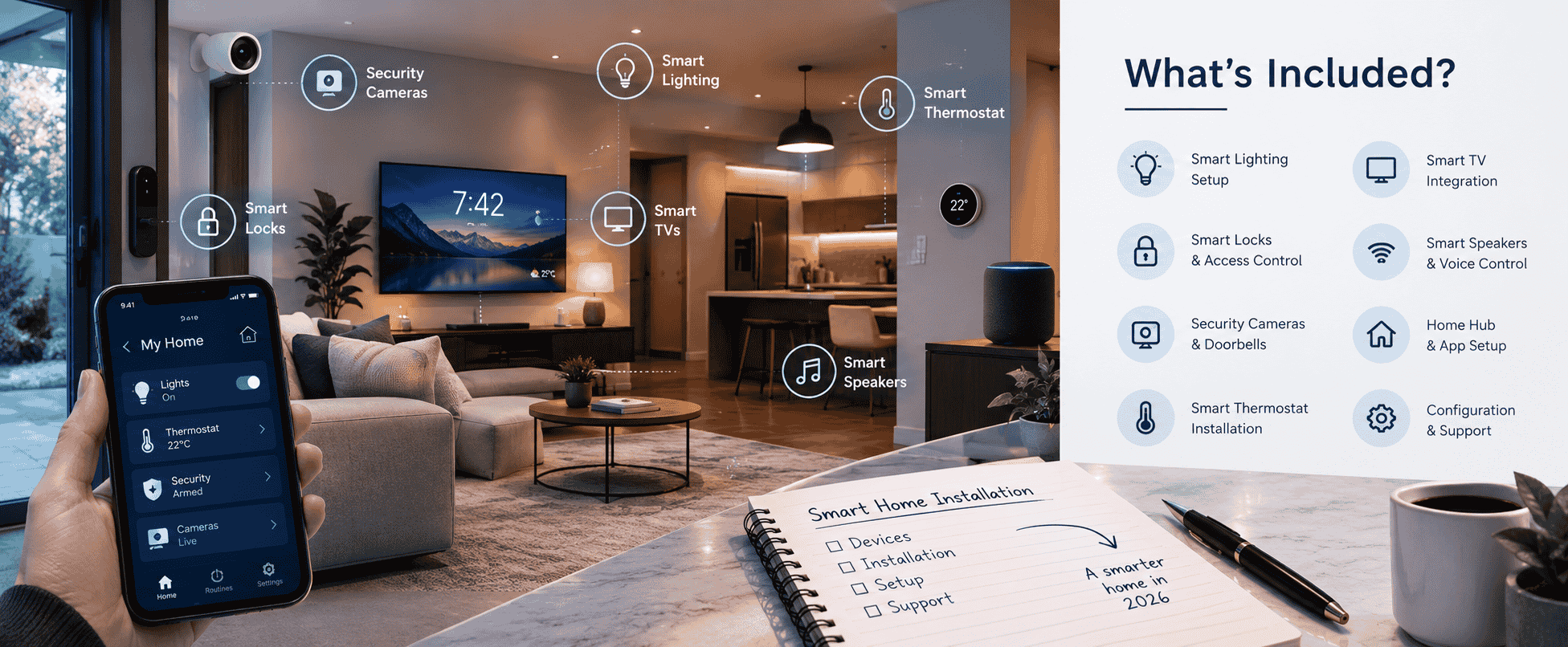
A professional installation may include:
- Installing smart devices
- Connecting devices to Wi-Fi or another network
- Setting up a smart home hub
- Connecting devices to your phone or tablet
- Configuring apps and accounts
- Testing each device
- Creating schedules and automations
- Connecting different brands and platforms
- Setting up security cameras and smart locks
- Troubleshooting connection issues
- Explaining how to use the system
This will vary depending on the type of installation you are making. A single smart thermostat is NOT a whole home automation system.
Three Common Types of Smart Home Setup
For not all homeowners, a full automation system is required. The majority of projects lie somewhere between the small and the DIY and a professionally integrated home.
1. Basic Smart Home Setup
This is the easiest place to start. You might install:
- Smart bulbs
- Smart plugs
- A smart speaker
- A video doorbell
- One smart thermostat
- A few basic sensors
Most of these devices connect wirelessly, so there is little or no work behind the walls.
If you are creating several nifty devices from scratch, a basic setup will run about $800 to $1,600. One Canadian 2026 guide estimates that the cost of a starter system, including video doorbell, thermostat, plugs and switch, smart lock and mesh Wi-Fi system, will range from $1,005 to $1,610 with optional professional installation.
This is sufficient to make a significant impact without the high price tag of high-tech equipment.
2. Mid-Range Home Automation
This is where things start working together instead of simply being individual smart devices. A mid-range setup could include:
- Smart lighting throughout several rooms
- Smart locks
- Security cameras
- Video doorbells
- Smart thermostats
- Motion sensors
- Smart speakers
- Automated schedules
- Multiple rooms connected to one system
If the system is professionally installed, comprehensive systems are estimated at $3,000 to $8,500 in Canada, although this will vary based on the devices and the installation.
When motion is detected, for instance at night, your system may switch on the lights in the hallways, when you are away, the thermostat can be adjusted and when someone is coming to the front door, an alert is sent.
That’s where home automation is more helpful than having a bunch of smart devices.
3. Whole-Home or Custom Smart Home
Large homes and high-end projects can involve much more than lights and cameras. A custom system may include:
- Central control panels
- Whole-home smart lighting
- Motorized blinds
- Multi-zone HVAC
- Security systems
- Door and access control
- Multi-room audio
- Home theatre equipment
- Network wiring
- Custom automation scenes
- Professional programming
A professionally integrated whole-home system can reach C$14,000 or more, while large custom projects with extensive lighting, security, climate, audio and access control can go considerably higher.
You are not just paying for devices at this level. You are paying for planning, wiring, integration, programming and testing.
Smart Home Installation Cost in Canada in 2026
Here is a practical look at common project ranges:
Smart home project | Approximate 2026 cost |
Basic smart home setup | $800–$1,600+ |
Smart thermostat installation | $200–$500 |
Smart doorbell installation | $150–$400 |
Smart lock installation | $200–$500 |
Basic installed smart home package | $800–$2,500 |
Security system setup | $800–$2,000 |
Comprehensive home automation | $3,000–$8,500+ |
Premium security-integrated system | $5,000–$15,000+ |
Large custom whole-home system | $14,000–$70,000+ |
These are planning ranges rather than fixed quotes. Location, device brands, wiring, property size and installation complexity can change the final price.
How Much Do Individual Smart Home Devices Cost?
You don’t necessarily need to buy everything at once. Starting with one or two devices can make the project much easier on your budget.
Smart Thermostat Installation
A smart thermostat typically ranges in cost from $100 – $300 and installation by a professional is about $200 – $500 depending on the HVAC configuration and the complexity of the installation.
It may be beneficial for those who need more of a control over the heating and cooling schedule.
Smart Lighting
One of the easiest to get started with is smart bulbs. Individual light fittings can be replaced or smart switches fitted for existing light fittings. Full-home switch retrofits cost considerably more because they involve multiple rooms and electrical work.
Security Camera Installation
Home security installation cameras can range from a simple DIY camera to a professionally installed multi-camera system.
Canadian home automation services pricing shows camera projects can vary enormously, from basic installations to systems costing tens of thousands for large or highly integrated projects.
For a typical home, the number of cameras, cable runs, storage and whether the cameras are wired or wireless will make a big difference.
Smart Locks and Doorbells
A smart lock gives you app-based access to your door, while a smart doorbell can send alerts when someone approaches.
Current Canadian estimates put smart lock installation around $ 200 –$ 500 per lock and smart doorbell installation around $ 150 –$ 400.
What Makes Smart Home Installation More Expensive?
The device itself is only one part of the bill. Several things can increase the final cost.
1. Number of Devices
Installing two smart devices is simple. Installing 30 across a house takes more time, planning and testing.
2. Existing Wiring
Wireless devices are usually easier to install. Wired systems may require new cables, electrical work or access behind finished walls.
3. Home Size
A larger house needs more devices, stronger network coverage and often more wiring.
4. Compatibility
Buying devices from different brands can create problems if they do not work well together.
This is one reason standards such as Matter matter. The Connectivity Standards Alliance says Matter is designed to improve interoperability between compatible smart home devices and major platforms.
5. Professional Programming
Basic installation is one thing. Creating custom scenes and automations takes additional time. For example:
Goodnight mode:
Lock doors → turn off selected lights → lower thermostat → activate home security system.
That kind of setup requires more than simply plugging in a device.
Do You Need Professional Smart Home Services?
Not always. You can probably handle basic smart plugs, bulbs and some wireless devices yourself if you are comfortable following setup instructions. Professional help makes more sense when you are dealing with:
- Electrical wiring
- Multiple rooms
- Security cameras
- Smart locks
- HVAC controls
- Network problems
- New construction
- Complex automation
- Several different smart home platforms
Current Canadian installation guides put professional smart home technology labour around $75–$150 per hour in some markets.
If electrical work is involved, use the appropriately qualified professional for that work rather than treating it like a simple DIY installation.
Smart Home Installation for Canadian Homes
Canadian homes have a few practical considerations that are easy to overlook. Things outdoors have to withstand regional climate. Another drawback of having a large home or property with heavy walls can be poor Wi-Fi reception.
Your network is important as well.
Modern security, communication, control devices and cameras, speakers, thermostats, locks and sensors all require seamless connectivity for a smart home. Just because you have weak Wi-Fi doesn’t mean more smart home devices will help.
It may be worth improving your network before expanding the system.
How to Keep Smart Home Costs Under Control
You don’t have to automate your entire house in one weekend. Start with the things that solve an actual problem. For example:
- Want better security? Start with a video doorbell, smart lock or cameras.
- Want easier temperature control? Start with a smart thermostat.
- Want better lighting? Add smart switches or bulbs to the rooms you use most.
- Want convenience? Add smart plugs and routines.
Then expand as you see what you actually use. If you need help with smart home installation, TapAFix can connect homeowners with professionals who offer services such as electrical work, smart home installation and other home repairs through one platform.
And if you’re a business looking to build or improve a home-services app, Cognitive IT Solutions can also help with mobile app development and technology solutions for service-based businesses.
In Summary
You can do smart home installation in 2026 as a small weekend project, or a large-scale investment in your home.
There are some smart devices that can cost under $1,000 and a professionally installed system can be thousands of dollars or more. The primary considerations are the number of devices, wiring, the size of the home, the level of network requirements and the desired level of automation.
The smart way to begin is to consider first the areas that are important to you. It’s never too late to add more!
Frequently Asked Questions (FAQs)
How much does a smart home installation cost?
The cost of a basic smart home system is $ 800–2,500, while a complete professional system can be as expensive as $ 3,000–8,500+.
How do I install a smart home system?
Select compatible smart items, connect them up to your Wi-Fi or hub, install the devices, download the apps and make your preferred automations. If it is a wiring or a more complicated system, call in a professional.
What wiring is required for a smart home?
Simple wireless equipment might require little or no additional wiring. More complex systems may need Ethernet, electrical wiring, speaker cables or dedicated wiring for security and control systems.
How much does a full smart home cost?
A full professionally integrated smart home solution can cost around $ 14,000–70,000+, depending on the home’s size, number of devices, wiring, security, lighting, HVAC, and automation features.